Opting for a lifting device, the resolution often reduces to variflex boom versus rigid crane. Rigid lifts give straightforwardness and are appropriate for elevated lifts, but jointed jibs produce superior maneuverability, facilitating access to confined spaces. Consider the construction area; if you’re principally facing obstructions or necessitate more detailed positioning, a variflex lift is probably the superior option. However, for open-air areas and rudimentary lifts, a telescopic arm might be a enhanced thrifty approach.
Comprehending Robust Lifting Arm Lifting Systems: Tasks and Benefits
Rigid arm hoists represent a custom type of lifting up equipment, constructed for hefty load handling in challenging locations. Their main trait is a unbending crane arm framework, which facilitates for correct positioning and advanced equilibrium, especially when running in cramped spaces or at important heights. Common jobs comprise bridge assembly, fabrication operations, aero site mounting, and civic growth. The major benefits are increased shielding, strengthened proficiency, and the facility to perform tasks that may be infeasible with standard equipment. This translates to curtailed spends and boosted initiative results.
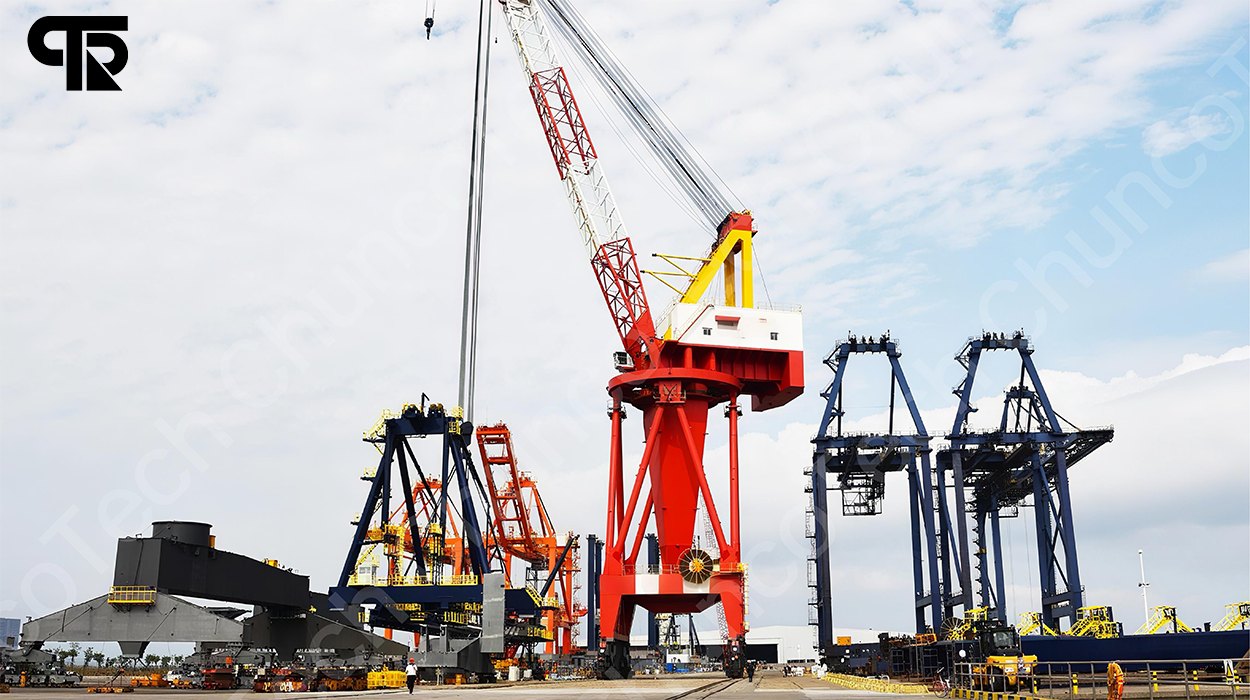
Quay Elevators: The Colossi of Waterfront Container Management
Newest monumental STS lifters represent the height of engineering achievement in the marine industry. Designed to effectively load and transfer containers between vessels and the jetty, they are necessary for the uninterrupted operation of modern ports. Their magnitude – often exceeding a ton meters – and phenomenal bearing power allow them to handle the most substantial container ships currently in activity, fundamentally changing global trade.
Knuckle Boom Cranes: Versatility in Hoisting Operations
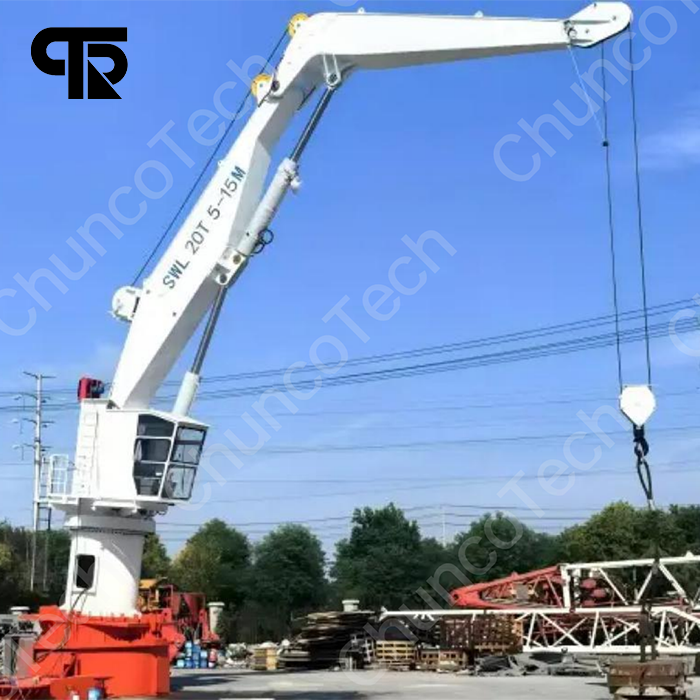
Knuckle boom machines are recognized for their exceptional adjustability, providing workers with a one-of-a-kind advantage in varied transporting functions. Housing a jointed boom section, these durable machines can stretch around obstructions and deploy cargo in squeezed zones. This aptitude makes them recommended for tasks in erection, management, energy endeavors, and countless other branches. In conclusion, knuckle boom loaders offer a valuable remedy to tough raising stipulations.
Straight Boom Cranes: Precision and Security Defined
Linear jib arm cranes are famous for their superior capacity to deliver correct lifting and arrangement of loads. In contrast to extendable models, their simple design brings about native reliability, making them suited for purposes requiring intense degrees of regulation and low fluttering. This characteristic is notably paramount in production sites and divisions where rigorous tolerances are essential.
Robust Arm Equipment Advantages: When Strength Counts
Routine lifting boom lifters often face challenges with flex, especially when lifting large weights or performing at substantial scopes. Still, robust boom cranes provide a clear edge by preventing harmful oscillation. This augmented steadiness converts to protected activities, greater exactness, and a decreased likelihood of weight movement. Therefore, heavy-duty lifting are best for applications where structural integrity is paramount.
Wharf Cranes: A Comprehensive Overview into STS Systems
A wharf lifting apparatus setup represents such key component within modern shipping ports. Advanced quay handlers are intricate devices designed to smoothly move freight away from enormous container transports near coastal vehicles. All activity entails accuracy making and coordinated systems to ensure welfare and increase throughput.
Analyzing Crane Classes: Pivoting, Boom, Tough, and Harbor
Choosing the fitting hoist for a specific assignment is vital. While many diversities exist, four popular types – segmented cranes, telescopic cranes, robust cranes, and quay cranes – symbolize significantly distinct facets. Pivoting cranes offer remarkable maneuverability due to their folded part, making them suitable for narrow spaces. Extendable cranes present multifunctional length through their telescoping division, excellent for overall hoisting obligations. Stiff cranes retain a orthogonal section, advantageous for precise locations where firmness is essential. Finally, Portside cranes, specialized for freight hauling at ports, boast gigantic lifting capability and far-reaching reach.
- Folding Handler Classes
- Telescopic Lifter Categories
- Tough Lifting Models
- Portside Apparatus Varieties
This Transformation In relation to STS Cranes: Developments and Breakthroughs
Across recent phases, STS (Ship-to-Shore) crane technology has undergone a remarkable change, propelled by requests for maximized port efficiency. Early STS cranes were comparatively simple devices, using basic loading mechanisms. Now, state-of-the-art STS cranes deploy sophisticated electronics, including advanced control systems, dynamic positioning features, and improved safety systems. A key pattern is the incorporation of powered by batteries propulsion, curbing discharges and upgrading operational endurance. Also, the rise of remote operation and data-driven maintenance are reshaping the landscape concerned with STS crane control. The possibility sees lasting stress on capacity utilization and the manufacture of even bigger cranes to support significantly bigger container ships.
 RMG Crane (Rail-Mounted Gantry Crane)