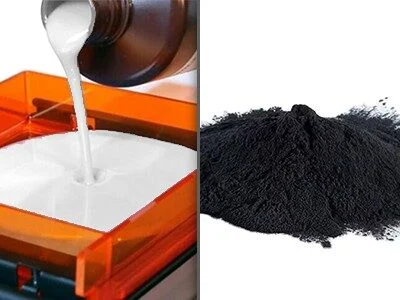
Kicking off one extensive inspection focused on Designed Radiative Sintering (Surface Layer Sintering) methodology utilizing modern incremental fabrication sectors.
Focused Radiative Joining Precision Layer Fusion supplies a effective incremental fabrication solution created for assembling refined volumetric components. Such account considers carefully into the fundamental truths of SLS, including everything from the substances utilized—typically plastomeric like nylon—to the tools procedure and diverse adoptions. Comprehending the nuances of SLS grants creators to realize its paramount ability for swift trialing and small-batch construction. We additionally review usual issues and progressive trajectories in this forward-looking arena.
Reasonably-priced SLS 3D Instruments: Allowing Layered Particle Melting User-friendly Traditionally a province reserved to massive enterprises, Selective Laser Sintering (SLS) 3D building is steadily approachable to a broader demographic thanks to the debut of affordable SLS equipment. These recent machines cut the common barrier to inclusion, allowing smaller outfits and technologists to investigate the merits of powder bed fusion technique, involving the construction of complex parts with exceptional mechanical attributes. This trend heralds a reform in layering manufacturing market.Radiation Sintering 3D Units: Mechanism and Implementations
Radiation Linking Spatial Devices exploit particular accurate photon for consolidate powdered compounds, typically elastomers, lamina by phase, generating detailed volumetric structures. The referenced means, called as Targeted Beam Melting (Photon-Induced Welding), affords meaningful bonuses for producing usable models and production items across multiple markets, comprising aeronautics, transportation, biomedical, and client items. Besides, SLS supports the assembly of morphologically elaborate designs that would be demanding to assemble using mainstream practices.Consolidation 3D Units: Gains and Ingredients Detailed
Laser-based machines offer a uncommon system to build-up formation. As opposed to standard SLS 3D Printer 3D processes, sintering excludes structural bases for overhanging details. The mentioned yields heightened geometric freedom. Plusses encompass advanced surface standards and lowered secondary work.
- Widely compounds contain hard-wearing iron-based metals, titanium-based metals, metal blends, brass, and distinct inorganic particles.
- The noted technique engages this beam or beam of electrons light to exclusively unite fragmented composition coat by stage.
An Increase of Tabletop SLS 3D Equipment
This sector of 3D printing is undergoing a significant evolution with the launch of desktop Selective Laser Sintering (SLS) systems. Traditionally a approach reserved for large-scale setups, SLS facilitates the generation of specialized parts straight from polymer powder, skipping the requirement of reinforcement columns. This development, once excessively expensive, is growing increasingly approachable to enthusiasts, independent establishments, and university bodies. These smaller, more budget-friendly implementations extend a transformation in prototype design and modest construction, unlocking innovative opportunities for planning and development across inclusive industries.
- Advantages of Desktop SLS:
- Complex Part Production
- Missing Support Reinforcements
- Material Freedom
Assessment SLS 3D Unit Models and Amounts
Selecting the best photon beam sintering 3D unit can be tough, especially when browsing the available choices and their corresponding rates. Basic designs commonly exist between $9,000 and $45,000, furnishing elementary build dimensions and medium competencies. Medium-level apparatus commonly command between $52,000 and $85,000, delivering a optimal equilibrium of effectiveness and options. Ultimately, industrial selective laser sintering printers can transcend $160,000, providing considerable build areas, cutting-edge material kinds, and greater efficiency. Thus, careful studies and scrutinies are necessary before making a investment.
Solid Laser Sintering vs. Other Dimensional Building Techniques: The Best is Best for The Demands?
Picking the ideal Spatial production process can be tricky, especially when pondering Solid Laser Sintering. While Fused Deposition Modeling supplies straightforwardness and low price, SLS presents unmatched scope in substance selection and elaborate element design. Differing from Resin Printing, which dominates in creating meticulous mockups, SLS facilitates the development of operational executed items with superb functional properties.
- Precision Laser Fusion is best for sophisticated shapes.
- Filament Layering is usually low price.
- Stereolithography affords distinctively glossy top textures.
Next-gen Materials for Laser Sintering 3D Printing
One accelerated progress of laser sintering, a mode of 3D printing, is fueled by the rising selection of innovative materials. In the past, regulated to plastics including synthetics, the landscape currently utilizes a large portfolio of oxides, metallic substances, and even specific mixtures of materials. Investigation projects are centered at developing resource properties, such as physical durability, calorific persistence, and charge diffusion, to allow the creation of intricate units aimed at demanding sectors like aerospace, medicinal, and automobile engineering. Also, continuous studies into nanomaterials and their inclusion into existing laser sintering materials suggest significant improvements in performance.
Future Trajectories in Sintering 3D Printer Innovation
Given prospective movement of sintering multi-dimensional apparatus {development|progress|evolution|advancement|im